In food packaging, marking is an essential element to ensure compliance, traceability and transparency towards the consumer. Information such as batch, expiration, mandatory symbols and technical data must always be legible, but this does not mean compromising the aesthetics of the packaging.
Today, especially in the HoReCa and food retail sectors, packaging is no longer just a container: it is part of the product experience and brand identity. For this reason, integrating marking strategically allows you to maintain a balance between functionality, readability and design.
To help you design professional packaging that takes care of every detail, in this guide we’ll explore how to insert markings and mandatory information without weighing down the graphics, keeping the packaging neat, legible, and consistent with the product image.
1. Why marking is essential
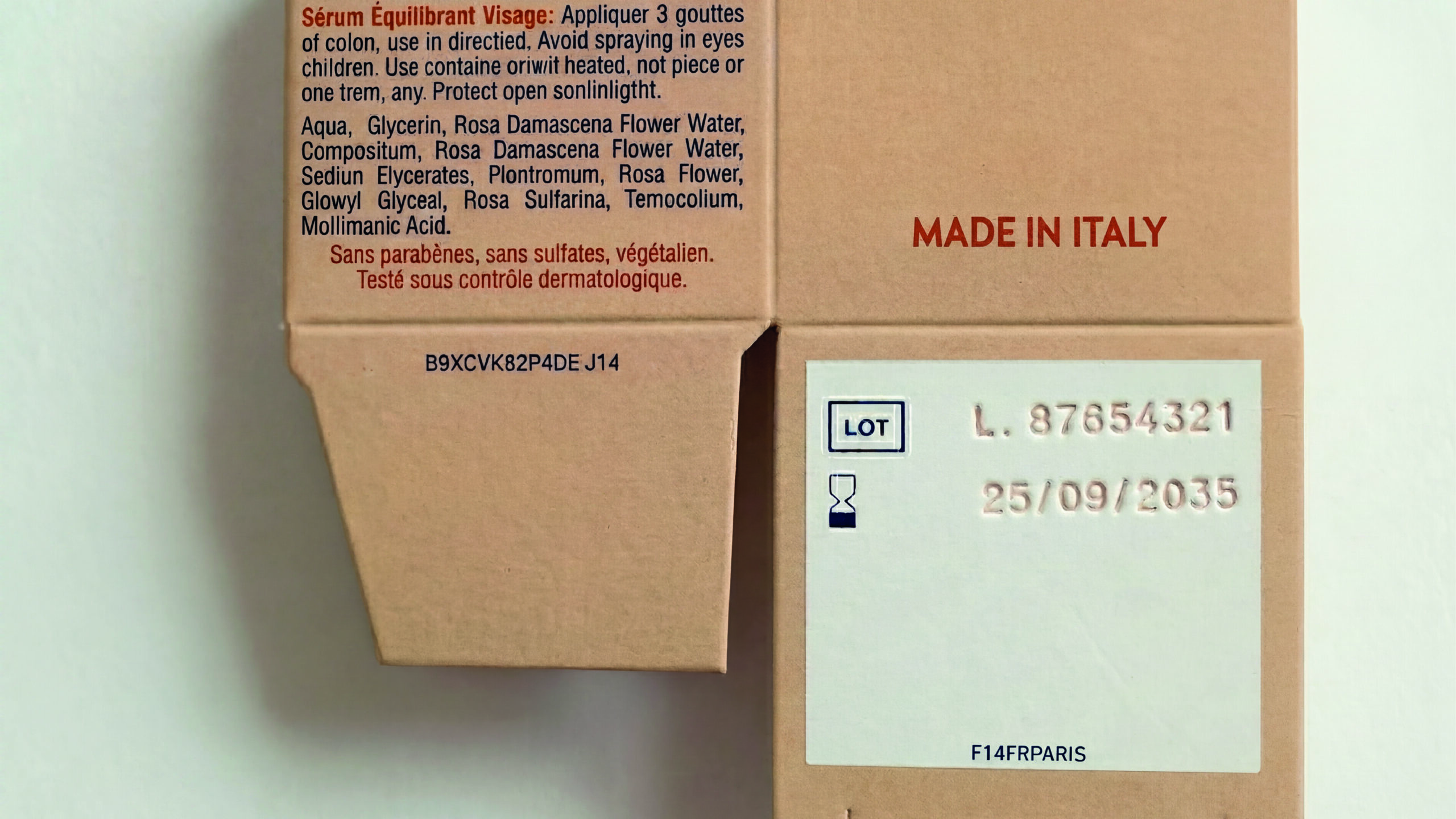
Marking is used to ensure safety and reguratory compliance, allowing the consumer to identify essential information such as:
- expiration date or TMC;
- production batch;
- conservation mode;
- recycling and safety symbols;
- product traceability.
These elements should not be perceived as an obstacle to design, but as an integral part of the visual communication of packaging.
2. How to integrate marking without compromising design
Effective marking must be readable but discreet. Some strategies allow you to keep your packaging clean and professional:
- Create dedicated areas – Placing technical information in precise sections of the package avoids a cluttered visual effect.
- Use correct visual hierarchies – Not all information must have the same graphic weight: the brand and the product remain the protagonists, while the marking can be smaller but still legible.
- Choosing consistent fonts – Using fonts compatible with the visual identity of the packaging improves graphic harmony.
- Exploit contrast without excess – Good contrast ensures readability without breaking the color balance of the package.
Careful design therefore allows for the integration of mandatory data without sacrificing the aesthetic impact of packaging.
3. Printing and marking technologies
The choice of technology also affects the final result. The most commonly used solutions include:
- Laser Marking – precise, durable and minimal, ideal for premium packaging;
- Industrial inkjet – versatile and suitable for rapid production;
- Integrated Labels – Flexible or Custom Packaging Practices;
- QR Dynamic codes – allow you to move a lot of information to digital, lightening the packaging graphics.
Using QR Smart queues and tools keeps the design cleaner, while still offering instant access to additional data and traceability.
4. Readability and accessibility
A well-designed marking must be not only compliant, but also accessible. Insufficient contrast, too small text, or overlapping information can compromise readability and the consumer experience.
To learn more about this, you can read our article Packaging inclusive and accessible food, dedicated to the importance of creating clear and easily understandable packaging for everyone.
5. Design and perception of value
Neat and well-designed packaging immediately conveys higher quality and reliability. Technical elements such as markings, symbols and mandatory information also influence the customer’s perception of the product.
For this reason, more and more companies are integrating marking directly into the graphic design of the packaging, transforming it from a simple regulatory requirement to part of the visual identity of your premises. It is therefore very important to also understand il meaning of food packaging symbols.
Integrating marking into food packaging without ruining the design means finding the right balance between conformity, readability, and aesthetics. Intelligent design allows you to enhance the product, improve communication with the consumer and maintain a professional and consistent image.
Discover the DOT – HoReCa Solutions shop and find food packaging solutions designed to combine design, security, and regulatory compliance.