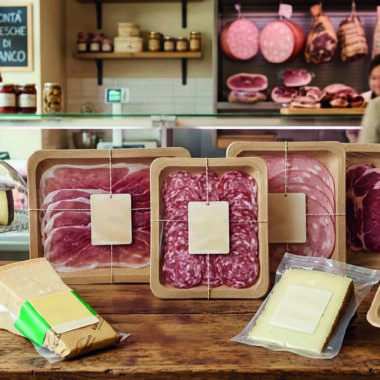
Today, even before tasting a dish, many customers photograph it. And often, in the shot, the protagonist is not just the food, but everything that accompanies it: boxes, bags, and packaging details.
For this reason, custom food packaging is no longer just a functional element, but a true visual communication tool. For restaurants, delicatessens, and take-away businesses, it means transforming every order into potentially shareable content on social media.
Packaging as social content
In recent years, especially thanks to social media, the relationship between food and communication has changed profoundly. The experience does not end with consumption, but continues online through photos, videos, and spontaneous content.
Packaging is often the first element that the customer sees, touches, and photographs. If designed correctly, it becomes an integral part of social content.
An effective packaging:
- represents the first visual impact of the brand
- strengthens identity through colors, materials, and graphics
- generates UGC content spontaneously
One often underestimated aspect is the role of colors, which influence brand perception and the packaging’s ability to remain memorable even in a fast scroll. Color and visual consistency help make the message more recognizable and immediate, as also explored in the importance of colors in food packaging.
The characteristics of packaging that goes viral
Packaging does not go viral by chance: there are some key elements that determine its ability to attract attention and generate shares on social media.
- Brand recognizability: an effective packaging allows for immediate identification of the venue even from a quick shot or inserted in a crowded feed. Logo, color palette, and graphic style are not aesthetic details, but elements that build visual consistency and make the brand immediately recognizable.
- Natural sharing attitude: it’s not just about “how beautiful it is”, but how easy it is to photograph and share. Shapes, proportions, and structure directly affect the packaging’s ability to transform into social content spontaneously.
- Memorable unboxing experience: unboxing is often the most shared moment, as it introduces an emotional dimension to the experience. Even small well-designed details can make the opening of the packaging an interesting gesture to tell and publish.
The role of materials in packaging perception
The choice of materials also decisively contributes to the visual effect of the packaging and its ability to be shared on social media. It’s not just a functional issue, but an aesthetic element that immediately influences brand perception.
Materials like kraft paper communicate naturalness and authenticity, while coated or matte laminated cardboards convey a more modern and polished image. Soft-touch finishes add a more premium visual and tactile sensation, often recognizable even in photography. At the same time, solutions with rougher or more natural textures can reinforce a handcrafted and genuine identity.
In the social context, the material becomes part of the overall aesthetics: what is perceived in a shot directly contributes to the value of the content and its ability to be shared.
What makes packaging more shareable on social media
Sharing is never entirely random: it can be favored through targeted choices.
- simple hashtags that are coherent with the brand
- invitations to share, without forcing
- distinctive visual elements recognizable even without reading the name of the venue
- QR code (link article SMART PACKAGING AND QR CODE: A NEW FOOD EXPERIENCE) that leads to the social page
The more the packaging is designed as something to show, the more its ability to circulate on social media organically increases.
Packaging as an experience to share
Packaging helps build an experience that the customer decides to share on social media. It is precisely this emotional component that transforms packaging into a communication tool for the brand, as happens in the concept of customer experience explored in the theme of emotional food packaging: the customer experience.
Therefore, packaging is now one of the most powerful tools to increase the visibility of a restaurant business. It does not just support the product, but actively contributes to brand communication.
When designed strategically, it becomes an element capable of transforming every order into potentially viral content, strengthening the venue’s presence on social media and in the customer’s perception.
Discover the Dot Horeca Solutions shop to find customizable food packaging designed to enhance your brand even on social media.