Smart packaging transforms food packaging into tools that go beyond simple protection, making them interactive, traceable, and sustainable. Thanks to digital technologies like QR Codes, smart sensors, and IoT (Internet of Things), it is possible to communicate directly with the consumer, improve food safety, and offer personalized experiences.
Solutions of this type find application in the HoReCa sector, including restaurants, bars, hotels, and other catering activities, helping companies enhance products and strengthen brand identity without compromising quality.
This is the heart of smart packaging, which we will analyze in the following 5 points.
1. What is Smart Packaging and reference regulations
Smart packaging represents an evolution of traditional packaging, integrating elements that monitor, communicate, and interact with the content and the external environment.
There are generally three categories: active packaging, which modifies internal conditions; intelligent packaging, equipped with sensors to detect parameters like temperature or gases; and connected packaging, which uses QR Codes, NFC, or RFID for digital traceability.
The adoption of smart packaging is regulated by European and international guidelines and regulations that define safety, quality, and sustainability requirements. To delve into the updated regulatory references on the topic, you can take a look here.
2. Main technologies of smart packaging
At the heart of smart packaging are therefore various technologies that make it interactive, traceable, and customizable:
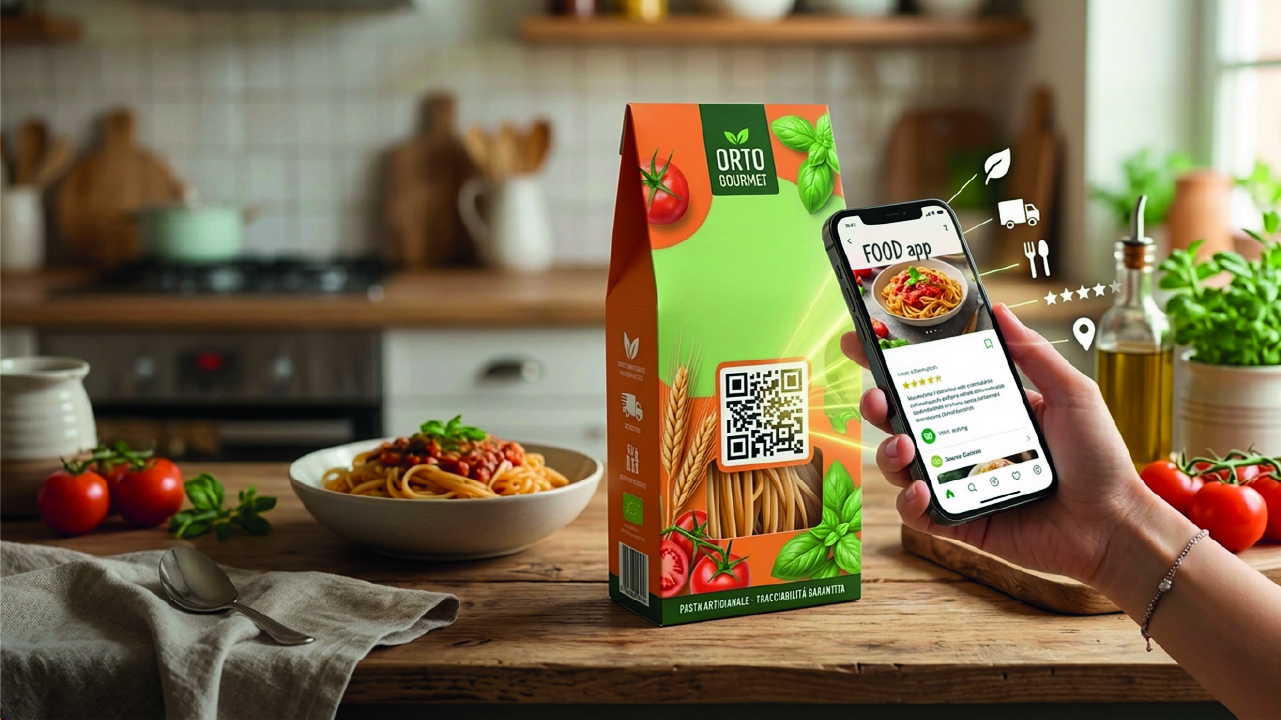
- Dynamic QR Codes – They contain not only static information but also connect the consumer to personalized content like video tutorials, recycling maps, or allergen alerts. In 2025, QR scans for fast-moving consumer goods (FMCG) saw an 88% increase.
- RFID and NFC – Allow contactless tracking, real-time geolocation, and fight against counterfeiting, ideal for logistics, retail, and inventory management.
- Smart sensors – Freshness tags and time-temperature labels alert to environmental anomalies, reducing food waste by up to 30%.
- Augmented reality (AR) – Integrates immersive experiences, such as in Fanta’s ‘What the Fanta?’ packaging, which doubled sales through gamification via QR.
These solutions are integrated: QR activates sensors, IoT data fuels AI for predictive analysis, creating a closed ecosystem that combines functionality, safety, and interactivity.
3. Benefits for companies and consumers
For consumers, smart packaging ensures transparency about the origin, ingredients, and ethical certifications, allowing for more informed choices and reducing household waste. For companies, it means operational efficiency: analytical data for dynamic pricing, automatic inventory management, and loyalty tools, such as loyalty programs via NFC.
The global smart packaging market will exceed $1.17 trillion by 2026, with a projected annual growth of 6-8%. In Italy, companies like Nimax, Linea Grafica, and NonSoloEtichette.it integrate these solutions for SMEs and catering businesses, combining digital traceability, automation, and interaction with the consumer.
4. Sustainability, ethics, and challenges of Smart Packaging
Smart packaging can optimize transportation, reduce empty volumes, and promote a circular economy, integrating QR Codes for proper disposal and bio-based materials. However, ethical and accessibility challenges arise: data protection (GDPR for NFC), usage by non-digital users, recyclability of sensors, and avoiding greenwashing.
Ensuring accessibility of packaging, as explained in our article “Inclusive and accessible food packaging”, is essential to make digital communication effective for all consumers, including those with special needs or limited familiarity with technology. Public-private partnerships and ethical standards are essential for transparency and sustainability throughout the supply chain.
5. Practical applications and future perspectives
Smart packaging finds particularly relevant applications in the food sector, where it allows monitoring of shelf-life, cold chain, and environmental conditions, ensuring freshness and safety of food. Thanks to QR Codes and smart sensors, companies can offer customers transparent information about ingredients, consumption tips, and personalized content, improving the consumer experience and strengthening loyalty.
This focus on digital interaction and sensory experience in the food sector is explored in our article The role of packaging in modern catering, where we explain how packaging becomes a strategic tool for enhancing products and brands.
The future of smart packaging in food aims for integration with 5G, AI, and interoperable EU standards, focusing on sustainability and zero waste, making every package not only protective but also a bridge between the company and the consumer.
Smart packaging and the use of QR Codes transform the customer experience and product management, making packaging strategic tools for communication, traceability, and personalization. Understanding these technologies allows for enhancing every product and increasing engagement.
To discover how Smart and personalized solutions can also revolutionize your food packaging, visit the DOT – HoReCa Solutions shop.