The circular economy represents a crucial paradigm shift in the way we conceive production and consumption, especially in the HoReCa sector, where packaging plays a significant role. This article explores how the adoption of circular principles in packaging can not only reduce environmental impact but also create economic value and enhance the reputation of companies.
What is the circular economy applied to packaging?
Definition of circular economy
The circular economy is a regenerative economic model, different from the traditional linear model “take, produce, use, and dispose”. The main objective of the circular economy is to keep products, materials, and resources in use for as long as possible, minimizing waste production. This is a transition towards a more sustainable system where the value of materials is preserved and waste is considered resources. This approach is fully applicable to packaging, transforming the way we design and manage packaging.
Fundamental principles of circular packaging
Here are the fundamental principles of circular packaging:
- Reduction of the amount of material used.
- Preference for renewable and easily recyclable materials.
Crucial steps also include designing reusable packaging. Packaging design must consider the entire life cycle of the product, from the initial design phase to its end of life, aiming to minimize environmental impact. The circularity of packaging also implies collaboration between producers, consumers, and waste managers to ensure an effective recycling process.
Benefits for the environment and industry
The adoption of circular packaging offers significant benefits. Some of these benefits are summarized in the following table:
| Environmental Benefits | Benefits for Industry |
|---|---|
| Reduction of waste, preservation of raw materials, decrease in carbon emissions, promotion of environmental sustainability. | Greater efficiency in production processes, creation of new business models, innovation of packaging solutions, improvement of corporate image. |
Furthermore, a sustainability-oriented approach meets the growing consumer expectations for sustainable packaging.
From waste to resource: how to reinsert materials into the production cycle
Material recovery strategies
Material recovery strategies are fundamental for the transition towards a circular economy. These strategies include separate collection, waste treatment, and valorization of recovered materials. The goal is to transform waste into resources, reintroducing materials into the production cycle. An example is the recovery of plastics from packaging, which can be recycled and reused to produce new packaging or other products. This approach reduces the amount of waste destined for landfill and preserves raw materials.
Reuse and recycling in the packaging process
Reuse and recycling are two pillars of circular packaging. While recycling involves transforming packaging materials into new raw materials, reuse means extending the life cycle of packaging. For effective recycling, proper packaging design is essential, choosing recyclable materials and simplifying the separation process. Additionally, it is important to raise consumer awareness about the importance of separate collection to promote material recycling.
| Action | Objective |
|---|---|
| Reuse | Extend the life cycle of packaging |
| Recycling | Transformation of materials into new raw materials |
The life cycle of packaging materials
The management of the life cycle of packaging materials is a crucial aspect of the circular economy. From the design phase, it is important to consider the entire life cycle, including end of life. This means choosing renewable materials, minimizing the use of non-recyclable materials, and designing easily dismantlable packaging to facilitate recycling. Assessing the environmental impact of packaging throughout its life cycle helps identify areas for improvement and promote the environmental sustainability of packaging.
Concrete examples in the restaurant sector
Case studies of sustainable packaging
In the restaurant sector, there are several concrete examples of sustainable packaging. Some restaurants use packaging made from recycled or renewable materials, such as cardboard or compostable bioplastics. Others have implemented deposit systems to incentivize the return of reusable packaging. These case studies demonstrate how it is possible to reduce the environmental impact of packaging in the HoReCa sector through innovative solutions and a sustainability-oriented approach. The adoption of sustainable packaging strengthens corporate image and attracts environmentally conscious consumers.
Innovations in the HoReCa sector
The HoReCa sector is continually evolving, with a growing focus on sustainability. Innovations in the packaging field include the development of biodegradable materials, edible packaging, and active packaging solutions that extend food shelf life. The use of advanced technologies allows for the design of more efficient and sustainable packaging, reducing food waste and environmental impact. These innovations represent an important step towards a transition to a circular economy in the restaurant sector.
Impact of packaging choices on sustainability
Packaging choices have a significant impact on sustainability in the HoReCa sector. Opting for sustainable packaging reduces the amount of waste, preserves raw materials, and decreases carbon emissions. A well-designed packaging, made from recyclable or reusable materials, helps to reduce the overall environmental impact of the catering activity. Additionally, transparent communication with consumers about sustainable packaging choices can increase awareness and promote more responsible behaviors.
The role of personalization in a circular model
Personalization and sustainability in packaging
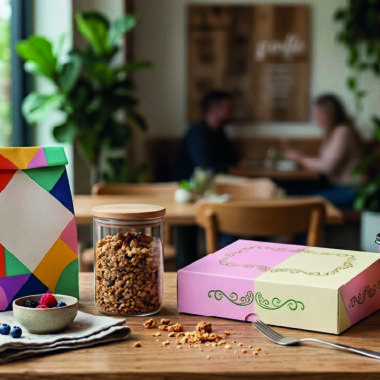
The personalization of packaging plays a crucial role in the circular economy. Designing packaging that is not only functional and attractive but also easily recyclable or reusable is essential. The design of personalized and sustainable packaging allows companies to communicate their environmental values and stand out from the competition. A personalized package made from recycled or renewable materials can enhance the positive perception of the brand by consumers. The design phase must consider the entire life cycle of the packaging.
The consumer and packaging choices
The modern consumer is increasingly aware of the environmental impact of packaging and prefers products with sustainable packaging. Packaging choices significantly influence the consumer’s purchase decision. A company adopting circular packaging demonstrates a commitment to sustainability, attracting conscious consumers. Informing the consumer about the sustainable features of the packaging, such as recyclability or compostability, can encourage more responsible behaviors and promote the transition to a circular economy. Environmental sustainability is increasingly central to consumer choices.
Design of personalized circular packaging
The design of personalized circular packaging requires a holistic approach that considers the entire life cycle of the product. It is essential to choose recyclable, renewable, or compostable materials and minimize the use of non-recyclable plastics. The design must facilitate the recycling and reuse of packaging. A personalized packaging can be designed to be easily dismantlable and separable into its components, facilitating the recycling process. The personalization of packaging must integrate with the principles of the circular economy.
Conclusion
Final reflections on the circular economy
The circular economy represents an urgent necessity to address global environmental challenges. The adoption of a circular economy model in the packaging sector is essential to reduce the quantity of waste, preserve raw materials, and mitigate climate change. The transition towards a circular economy requires a joint commitment from producers, consumers, and institutions. Promoting sustainability and circularity in packaging is essential to ensure a more sustainable future.
The future of packaging in the HoReCa supply chain
The future of packaging in the HoReCa supply chain is inextricably linked to the circular economy. An increase in the use of renewable, biodegradable, and compostable materials is expected, as well as the development of increasingly efficient reuse and recycling systems. The design of packaging will increasingly focus on sustainability and reducing environmental impact. Companies that adopt a proactive approach towards sustainable packaging will have a competitive advantage in the market. Environmental sustainability will be a determining factor for success in the HoReCa sector.
CTA: Discover DOT products designed for zero impact packaging.
Discover DOT products designed for zero impact packaging. DOT offers innovative and sustainable packaging solutions in the HoReCa sector, helping you reduce the environmental impact of your business and communicate your commitment to sustainability. Choose DOT for circular packaging and contribute to building a greener future.