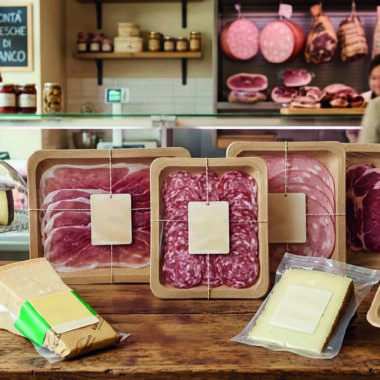
In the dynamic and increasingly attentive food sector, food packaging plays a crucial role. It’s no longer just about containing and protecting food products, but ensuring fundamental aspects, including:
- food security
- sustainability
- compliance with European regulations
With 2025 in mind, it is essential to understand the necessary certifications to navigate this complex landscape and ensure the quality and reliability of food packaging.
Because food security starts with packaging
Importance of safety in the food sector
Food safety is a top priority in the food sector. Inadequate packaging can compromise the integrity of food products, causing contamination and health risks for consumers. This is why food packaging must meet certain fundamental requirements, including:
- Being designed and produced with safe materials suitable for contact with food.
- Being compliant with current regulations.
Certification thus becomes an essential element to ensure that the packaging meets all safety standards.
Relationship between packaging and sustainability
Today, sustainability is as crucial a factor as food safety. Consumers and companies are increasingly aware of the environmental impact of packaging and are demanding more sustainable solutions. For this reason, packaging must be designed with various fundamental aspects in mind, including:
- Reduction of environmental impact
- Promoting recyclability and the use of recycled materials
Environmental certifications play a fundamental role in validating a company’s commitment to sustainability and reducing packaging waste. Sustainable food packaging is now an imperative for 2025.
Impact of regulations on food safety
European regulations, such as the new PPWR (Packaging and Packaging Waste Regulation), have a significant impact on food safety and packaging waste management. These regulations establish specific requirements for the composition, recyclability, and management of food packaging. Compliance with these regulations is essential to market food products in accordance with the law and to ensure consumer safety. By 2025, these regulations will gain even more strength, requiring greater attention from the entire supply chain.
The main certifications to know
EN 13432 (compostability)
The EN 13432 certification is fundamental for food packaging that claims compostability. This European standard defines the criteria that packaging must meet to be considered compostable in industrial composting facilities. Obtaining this certification demonstrates a commitment to sustainability and reducing environmental impact, ensuring that the packaging degrades safely and in a controlled manner. Attention to the compostability of food packaging in 2025 is increasing.
FSC (paper and cardboard)
The FSC (Forest Stewardship Council) certification ensures that the paper and cardboard used in food packaging come from responsibly managed forests. This means that forest management adheres to high environmental, social, and economic standards. Choosing FSC-certified packaging helps preserve forests, protect biodiversity, and support local communities. The commitment to sustainability in the food sector also involves choosing certified materials.
MOCA (materials in contact with food)
The MOCA (Materials and Objects in Contact with Food) certification is essential to ensure food safety. This certification attests that the materials used in food packaging are suitable for contact with food and do not release harmful substances that could migrate into the product. Compliance with MOCA requirements is mandatory for all packaging intended for contact with food and represents a guarantee for consumer health and the food industry.
How to verify the reliability of chosen products
Compliance audits for food packaging
To ensure the reliability of food packaging, it’s essential to conduct compliance audits. These audits verify that the packaging meets all food safety regulations and required certifications. A thorough audit examines the entire life cycle of the packaging, from design to production, to identify any critical points and ensure compliance. The audit is an essential element for traceability and food safety in the sector.
Verification of environmental certifications
Verifying environmental certifications is a crucial step in assessing a supplier’s commitment to sustainability. Checking the validity of certifications such as FSC, EN 13432, and other environmental certifications ensures that the food packaging has been produced in compliance with high environmental standards. This verification helps reduce environmental impact and promotes sustainable food packaging for 2025, addressing the needs of the food sector.
Sustainability report and transparency
Requesting and evaluating a supplier’s sustainability report is a great way to verify their reliability. A transparent sustainability report provides detailed information about the company’s environmental, social, and economic impact. This document allows the evaluation of the supplier’s commitment to sustainability and their ability to provide food packaging that meets high safety and environmental standards. Transparency is fundamental in the food supply chain.
The role of DOT in food safety
Consulting services for sustainable packaging
DOT positions itself as a strategic partner for companies in the food sector, offering specialized consulting services in sustainable packaging. DOT helps companies design food packaging that complies with European regulations, promotes recyclability, and reduces environmental impact. Thanks to its expertise, DOT guides companies towards innovative and sustainable packaging solutions, ensuring compliance and food safety for products.
Support in the transition to packaging 2025
In light of 2025, DOT offers comprehensive support in the transition to packaging 2025, in line with the new PPWR regulation and the growing demands for sustainability and food safety. DOT provides consultancy on material selection, packaging design, and obtaining necessary certifications. The goal is to help companies navigate the complex regulatory landscape and implement sustainable food packaging solutions.
Importance of certification for customers
DOT emphasizes the importance of certification for customers in the food sector, offering certified and guaranteed food packaging. Certifications such as MOCA and FSC attest to compliance with the highest standards of food safety and sustainability. Choosing a supplier like DOT, which invests in certification, means protecting consumer health and contributing to the reduction of the environmental impact of food packaging in 2025.
Conclusion
Final reflections on safety in food packaging
In conclusion, safety in food packaging is a crucial aspect that requires constant attention and commitment from the entire supply chain. Certifications, European regulations, and sustainability are essential elements to ensure food safety and environmental protection. The food sector must aim for sustainable and safe food packaging that meets the needs of consumers and the environment.
Call to action for certified and safe packaging
Don’t wait for 2025 to adapt to the new regulations! Rely on DOT for certified and safe packaging for your customers. DOT offers you consulting, support, and innovative solutions for food packaging that respects the environment and ensures food safety. Choose the quality and reliability of an experienced supplier in the food packaging sector, for a safer and more sustainable future.