Why plan packaging based on seasonality
In the HoReCa sector, seasonality has a determining impact on work organization and supply management.
Summer brings a boom in consumption related to drinks, ice cream, and street food, while the winter period concentrates requests on catering, pastry shops, and courtesy items for B&B and hotels.
In both cases, packaging becomes a strategic element: it is the bridge between service and customer, and it must always be available in adequate quantity and quality.
Not planning supplies means risking not having the right containers available during peak demand moments or, conversely, finding oneself with unnecessary stock during quieter periods.
Planning with a seasonal perspective means ensuring service continuity, optimizing costs, and improving the customer experience by reducing waste and inefficiencies.
Well-managed packaging is not just an accessory but a competitive asset.
The risks of unplanned management
Managing packaging without a structured plan may seem like a more flexible choice, but in the long term, it proves counterproductive.
Without a purchasing strategy based on seasonal peaks, decisions become fragmented, often made at the last minute and therefore more costly.
This approach can lead to slowdowns in service, urgent orders with increased costs, and a warehouse that is difficult to control.
Another risk concerns the image of the establishment: a customer who receives an order with makeshift or poor-quality packaging will perceive less care and professionalism.
In a competitive market like HoReCa, packaging is also branding, and its absence or inadequacy risks compromising reputation.

Extra costs and unnecessary stock
One of the most common effects of lack of planning is the accumulation of unused stock.
Every excess package represents tied-up capital, occupied space in the warehouse, and more complex management.
On the contrary, a shortage of supplies forces last-minute orders, often more expensive and less sustainable from a logistical point of view.
Both situations negatively affect the margins and efficiency of the establishment.
Waste and environmental impact
Packaging that is purchased but not used weighs not only on the budget but also on the environment.
Choosing eco-sustainable materials is important, but if these are not managed correctly, they lose much of their value.
Wasting means increasing waste and compromising the brand’s green commitment.
Conscious planning, on the other hand, allows for purchasing only what is needed, reducing waste and conveying a more responsible image.

How to plan supplies efficiently
An effective supply plan is not limited to ordering at the right moments: it requires method, analysis, and the ability to adapt quickly to changes.
The key is to consider packaging as an integral part of the management strategy of the establishment, on par with food supplies and staff organization.
Analysis of seasonal peaks
Every HoReCa activity knows its “hot” moments: summer with the boom of delivery and street food, the festive months with corporate events and catering, up to local events that can generate sudden peaks.
Analyzing historical data is essential: past orders, booking peaks, and even market research help to estimate the actual need for packaging.
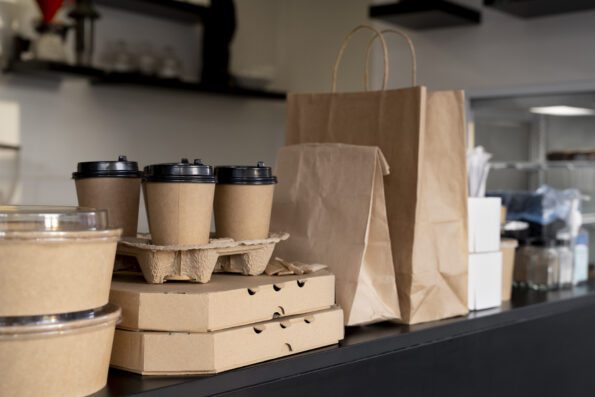
For example, a restaurant that works a lot with summer delivery can calculate in advance the consumption of single-use boxes, cups, and compostable cutlery, while a B&B can evaluate an increase in personalized courtesy items in anticipation of the Christmas holidays.
A careful analysis allows for targeted orders, avoiding shortages and minimizing waste. Furthermore, forecasting allows for negotiating better conditions with suppliers, turning planning into an economic advantage.
Coordinating logistics and suppliers
Stock planning becomes truly effective only if supported by reliable suppliers.
A partner that guarantees wide range, fast deliveries, and quick restocking reduces service interruption risks and allows for smoother operations.
It is also important to evaluate the possibility of personalized and modular orders, which allow adaptation to seasonal variations without accumulating unnecessary stock.
DOT, for example, supports HoReCa professionals with intelligent logistics, updated catalogs, and eco-sustainable and customized packaging solutions.
This means always having what is needed available, without waste or excessive costs.
Tools and best practices for restaurants and B&B
To make packaging planning even more effective, it is useful to adopt practical tools and established guidelines:
- Create a procurement calendar linked to seasonal peaks (summer, holidays, local events).
- Use management software to monitor real-time consumption and stock levels.
- Favor versatile and customizable packaging that can adapt to different occasions of use.
- Collaborate with suppliers that guarantee updated catalogs and timely deliveries, to minimize operational risks.
By following these best practices, restaurants and B&B can reduce costs, improve warehouse management, and offer a consistent quality service, without surprises or interruptions.
The difference of a reliable partner
Seasonal packaging is not a detail but a strategic factor that influences costs, sustainability, and customer experience.
Planning means ensuring service continuity, reducing waste, and conveying to customers an image of professionalism and responsibility.
Relying on a partner like DOT, which combines customization, design, sustainability, and efficient logistics, means transforming packaging into a true growth tool.
With a wide range and the possibility of rapid and targeted supplies, DOT helps every HoReCa activity to be ready at the most critical moments.