The concept of sustainability is increasingly gaining ground in our daily lives, radically transforming many of our habits. From waste separation to bike sharing, through the promotion of renewable energy, the areas of application of this concept are many and varied. In recent years, the catering sector has been one of the most influenced by environmental impact. Is it really possible to be eco-sustainable in the kitchen? What are the perfect materials to become an eco-friendly business? Can I do delivery while fully respecting the environment?
Let’s try to clarify a bit and discover together how to reduce environmental impact in catering.
Index
- Sustainable catering: how does it work?
- The dark side of the expansion of delivery and food packaging
- Paper containers: an eco-friendly protagonist for the future of catering
Sustainable catering: what is it and how does it work?
Adopting sustainable practices today is not just a moral obligation, but a necessity for the planet.
In the catering sector, a growing segment of consumers has become increasingly aware of environmental respect, so adopting conscious choices can help attract more customers.
But how can a restaurant contribute to sustainability? What does it mean, in this sector, to be sustainable?
Sustainable catering is based on managerial and operational practices aimed at optimizing resources. This means, for example, reducing waste and improving energy efficiency.
Sustainability, however, is no longer just a matter of avoiding waste: it represents an opportunity for economic growth, thanks to technologies and methods that increase productivity and reduce management costs.
How to do it? Among the various actions that can be taken to achieve these goals are selecting the best products for the environment, choosing sustainable suppliers, using eco-sustainable energy sources, such as photovoltaic panels, and finally, adopting eco-friendly materials.

The dark side of the expansion of delivery and food packaging
In recent years – also due to the pandemic – more and more restaurants have become acquainted with the world of delivery and, indirectly, with food packaging.
However, the growth of this practice has brought with it some extremely negative aspects from an environmental point of view:
- Packaging represents a significant share of waste produced, especially plastic waste.
- The production of packaging requires a huge use of natural resources, water, and energy.
- The production process and disposal of materials can generate greenhouse gas emissions.
- Plastic materials persist in the environment for a long time and cause soil and ocean pollution.
For a long time, it was believed that it was difficult to give up plastic packaging, which, although not very sustainable, ensures excellent preservation and hygienic protection of food. However, these doubts were dispelled precisely during the pandemic period.
It has been proven that single-use plastics do not offer greater protection compared to paper or reusable packaging. The characteristics that have made paper packaging increasingly central to reducing the environmental impact of catering do not end here.
Paper containers: an eco-friendly protagonist for the future of catering
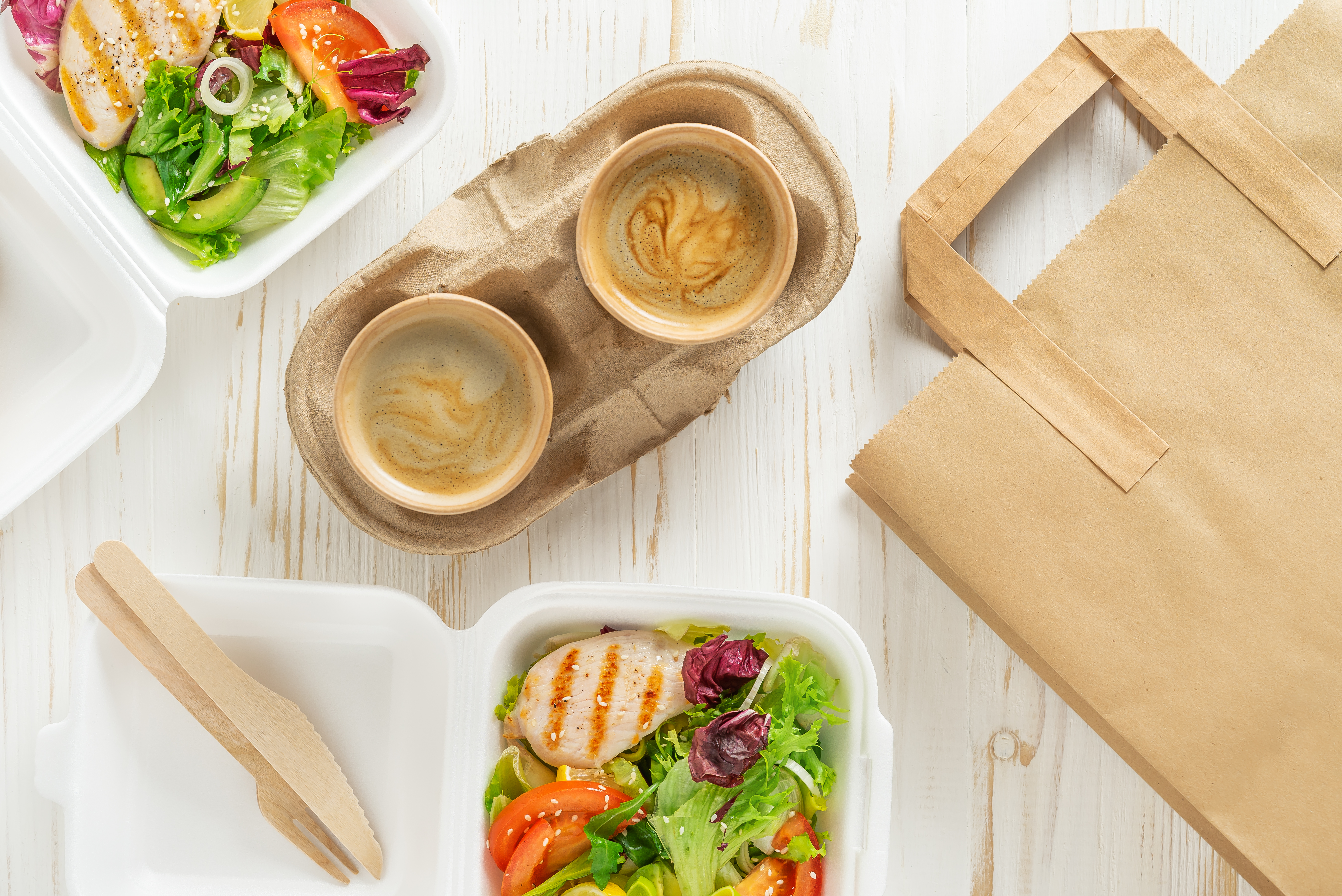
The choice of eco-friendly materials such as paper or bagasse is increasingly guiding catering towards sustainability. These are materials that perfectly meet the environmental needs and the demands of restaurateurs and customers.
That is why restaurateurs have increasingly chosen to use paper containers for delivery and take away:
- Reduction of plastic waste
- Greater recyclability
- Lower impact on production
- Positive image of the restaurant
- Versatility
Reduction of plastic waste
The use of paper reduces the amount of non-recyclable waste produced by the activity. Moreover, being a natural and biodegradable material, paper decomposes more quickly, reducing soil and ocean pollution.
Greater recyclability
Paper can be recycled multiple times, reducing the need for virgin raw materials and the energy required for production.
Lower impact on production
The production of paper requires less energy than that of plastic, reducing greenhouse gas emissions. Moreover, paper comes from forests, which, if managed sustainably, represent a renewable energy source.
Positive image of the restaurant
Consumers perceive paper containers as more eco-friendly, which can improve the restaurant’s image and attract more customers. The use of paper can also be a differentiation element and an opportunity to communicate corporate values.
Versatility
From tissue paper bags to kraft paper pastry boxes, paper offers endless possibilities to protect and enhance food products.
Its adaptability allows for the creation of tailored packaging, suitable for the specific needs of each food item, ensuring maximum safety and quality.